Beyond Gut Feelings: How Real-Time Data Efficacy Transforms Clinical Trial Patient Engagement
In the high-stakes world of clinical trials, where 85% of patients remain unaware of available studies and only 5-7% ultimately enroll when presented with information through traditional campaigns, sponsors can no longer afford to rely on intuition or outdated metrics. The difference between trial success and failure increasingly comes down to one critical factor: the ability to capture, analyze, and act on real-time data that drives meaningful patient engagement.
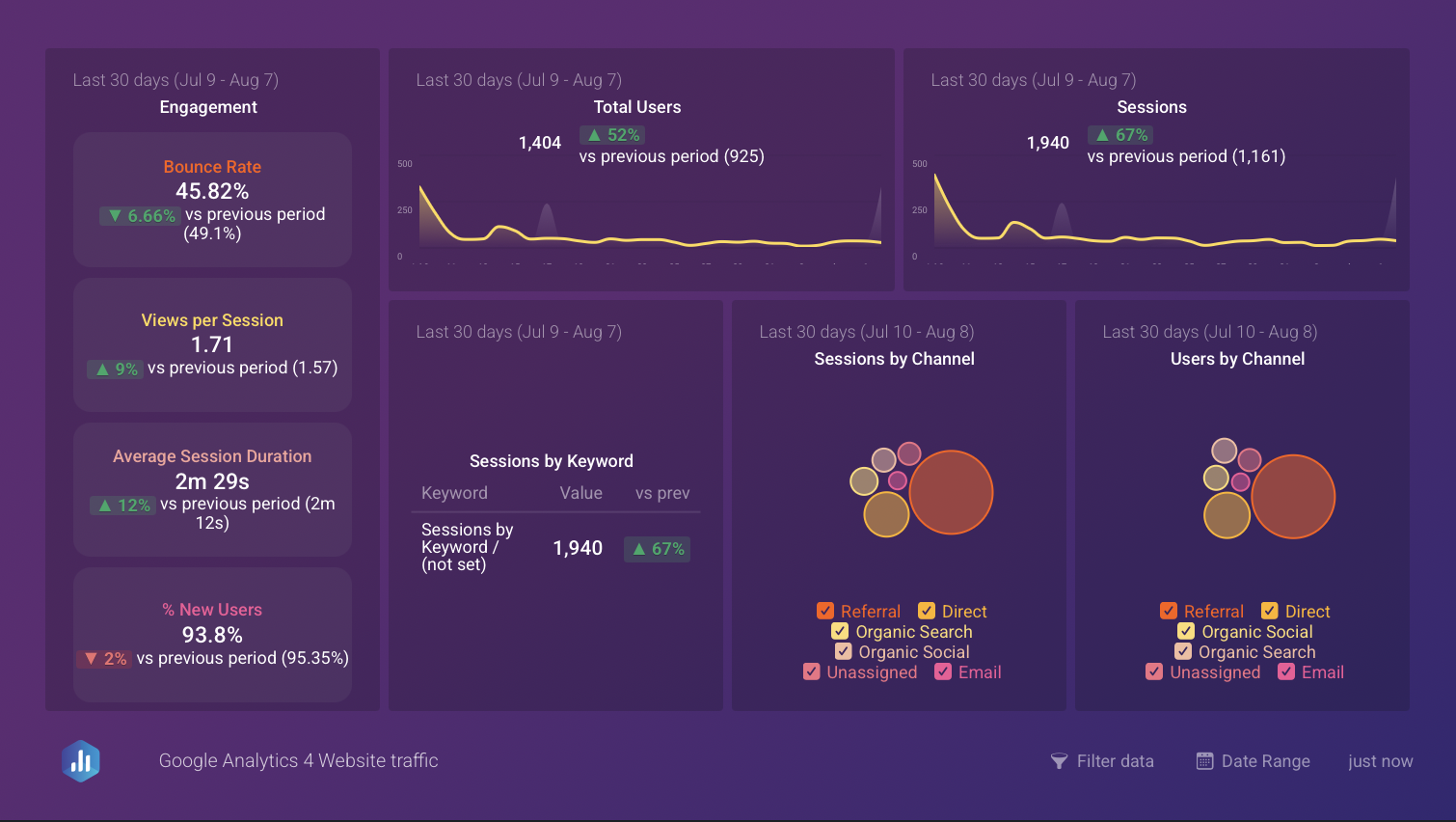
Community Expert Solutions (CES) has revolutionized this approach through customizable real-time data dashboards that don't just track recruitment numbers—they provide actionable insights that accelerate enrollment, improve retention, and optimize marketing spend across diverse patient populations. Our work demonstrates how data-driven engagement strategies can achieve referral conversion rates of 35% and 15.4% enrollment conversion rate through organic traffic.
The Hidden Cost of Data Blindness in Clinical Trials
Most clinical trial sponsors are flying blind. They invest millions in recruitment campaigns, community outreach, and patient engagement materials without understanding which elements actually drive enrollment decisions. Traditional metrics—website visits, brochure downloads, inquiry calls—provide surface-level insights but fail to capture the complex patient journey from awareness to enrollment.
This data blindness carries enormous costs. The average Phase III trial costs $53 million, with recruitment delays adding $600,000 to $8 million per day. When sponsors can't identify which engagement strategies work for specific patient populations, they waste resources on ineffective tactics while missing opportunities to scale successful approaches.
The consequences extend beyond financial impact. Failed recruitment efforts damage community trust, particularly among historically underrepresented populations who may view unsuccessful outreach as another example of extractive research practices. Once trust is lost, rebuilding relationships can take years—time that patients with serious conditions simply don't have.
What Data Efficacy Really Means in Clinical Trial Context
Data efficacy in clinical trial patient engagement goes far beyond traditional analytics. It encompasses the systematic collection, analysis, and application of multi-dimensional data points that illuminate the patient decision-making process across diverse demographic and cultural contexts.
Effective data systems capture not just what patients do, but why they do it. They track engagement patterns across multiple touchpoints—from initial awareness through family discussions to final enrollment decisions. Most importantly, they provide real-time insights that enable immediate strategy adjustments rather than post-campaign retrospectives.
The Multi-Touchpoint Reality
Research consistently shows that individuals require 8-10 exposures before taking action to enroll in clinical trials. However, these touchpoints aren't uniform across populations. Hispanic families may prioritize family discussion materials, while African American patients may respond more strongly to community ambassador presentations. Elderly patients might engage deeply with printed materials but struggle with digital interfaces.
Understanding these patterns requires sophisticated data collection that maps engagement across multiple channels simultaneously. CES's approach captures this complexity through integrated tracking that follows patients through their entire decision journey, identifying which combinations of touchpoints drive enrollment for specific demographic groups.
CES's Revolutionary Dashboard Approach
Community Expert Solutions has developed a proprietary real-time data dashboard system that transforms how sponsors understand and optimize patient engagement. Unlike static reporting tools that provide historical snapshots, our dashboards offer dynamic, actionable insights that enable immediate strategy refinement.
Real-Time Engagement Tracking
Our dashboard system monitors patient interactions across all engagement channels simultaneously:
Digital Engagement Metrics: Beyond basic website analytics, we track scroll depth on study materials, time spent viewing animated videos, and interaction patterns with glossaries and FAQs. This granular data reveals which content elements resonate with different patient populations.
Community Touchpoint Analysis: We monitor engagement through community partners, patient advocacy groups, and trusted messengers, measuring not just reach but quality of interaction and conversion to next steps in the enrollment process.
Cultural and Linguistic Preferences: Real-time data shows language preferences, cultural adaptation needs, and community-specific engagement patterns, enabling immediate localization adjustments.
Predictive Enrollment Modeling
Perhaps most powerfully, our dashboards don't just report what happened—they predict what's likely to happen next. By analyzing engagement patterns, demographic data, and historical enrollment trends, our system identifies high-probability enrollment candidates and recommends optimal engagement strategies for each individual.
This predictive capability transforms recruitment for clinical trials. By identifying patients most likely to enroll based on engagement patterns, study coordinators could prioritize follow-up efforts and customize their approach to each patient's demonstrated preferences and concerns.
Case Study: Pharma Client Success Metrics
A kidney trial we supported exemplifies how data-driven engagement strategies deliver measurable results. CES applied the CONNECT Framework alongside our real-time dashboard system to achieve remarkable outcomes:
Exceptional Digital Engagement: The study achieved over 2,000 website sessions monthly with a 55.19% engagement rate—significantly higher than industry averages of 20-30%. This wasn't accidental; real-time data showed which content elements kept patients engaged, allowing for continuous optimization.
Outstanding Conversion Rates: Most impressively, the campaign achieved a 35% conversion rate from engagement to enrollment. Industry benchmarks typically range from 5-7%, making this result nearly seven times more effective than standard approaches.
Culturally Responsive Distribution: Over 1,800 brochures were distributed in both English and Spanish, with real-time data showing preference patterns by geographic region and demographic group. This enabled targeted distribution that maximized resource efficiency.
Video Content Optimization: Community-informed animated videos in multiple languages proved crucial for converting hesitant patients. Patients who viewed the video were more likely to proceed with screening, leading to increased investment in video content development.
Provider Confidence Building: The data-driven approach increased confidence among nephrology providers and community organizations making referrals. When referring physicians could see evidence-based engagement strategies in action, they became more willing to discuss trial participation with their patients.
The Technology Behind the Insights
CES's dashboard system integrates multiple data streams through sophisticated analytics engines that provide actionable insights in real-time:
Integrated Data Collection
Our system seamlessly combines data from multiple sources:
Website analytics with advanced user journey mapping
Patient communication preferences
Demographic and cultural identifiers
Historical enrollment pattern analysis
Advanced Segmentation Capabilities
The dashboard automatically segments patients based on engagement patterns, demographic characteristics, and predicted enrollment probability. This enables sponsors to:
Identify high-value patient segments for focused outreach
Customize messaging for specific cultural or linguistic groups
Optimize resource allocation based on conversion probability
Track engagement effectiveness across different populations
Actionable Alert Systems
Rather than requiring manual data analysis, our dashboards proactively identify opportunities and challenges:
Real-time alerts when engagement drops in specific demographic groups
Automated recommendations for content optimization based on user behavior
Predictive warnings about potential enrollment shortfalls
Success pattern identification for scaling effective strategies
The Strategic Advantage of Real-Time Optimization
Traditional clinical trial recruitment operates on quarterly or monthly optimization cycles. Sponsors launch campaigns, collect data over weeks or months, analyze results, and adjust strategies for future efforts. This approach wastes enormous opportunities during active recruitment periods.
CES's real-time approach enables daily or even hourly strategy refinement. When dashboard data shows that Hispanic patients in Texas are engaging strongly with family discussion materials but struggling with digital consent processes, study teams can immediately implement targeted solutions. This agility dramatically improves enrollment rates while building stronger community relationships.
Immediate Impact Areas
Content Optimization: Real-time engagement data shows which sections of study materials patients read thoroughly versus which they skip. This enables immediate content refinement to improve comprehension and reduce concerns.
Channel Effectiveness: By tracking conversion rates across different outreach channels—community partnerships, digital advertising, physician referrals—sponsors can immediately shift resources to the most effective approaches.
Demographic-Specific Strategies: When data shows different engagement patterns among demographic groups, teams can quickly develop and test targeted approaches rather than waiting for formal analysis periods.
Barrier Identification: Real-time tracking of where patients disengage in the enrollment process enables immediate intervention to address common obstacles.
Beyond Recruitment: Retention and Long-Term Engagement
While initial enrollment often receives the most attention, patient retention throughout trial duration is equally critical. CES's dashboard system extends beyond recruitment to provide insights that improve retention rates and overall trial experience.
Retention Predictive Modeling
Our system analyzes early engagement patterns to predict retention probability. Patients who engage deeply with educational materials and family discussion guides during recruitment show significantly higher retention rates throughout the trial. This insight enables proactive retention strategies for higher-risk participants.
Ongoing Engagement Optimization
The dashboard continues tracking patient engagement throughout the trial, identifying opportunities to improve the participant experience:
Monitoring comprehension of study visit requirements
Tracking utilization of support materials
Identifying communication preferences for ongoing updates
Measuring satisfaction with various touchpoints
Community Relationship Building
Long-term community engagement requires understanding which strategies build lasting trust versus short-term enrollment. Our system distinguishes between transactional interactions and relationship-building activities, enabling sponsors to invest in approaches that strengthen community partnerships for future trials.
The ROI of Data-Driven Engagement
Investing in sophisticated data analytics might seem costly, but the return on investment is substantial when measured across the full trial lifecycle:
Faster Enrollment: Our client’s 35% referral conversion rate and 13% enrollment rate compared to industry averages of 5-7% demonstrates how data-driven strategies accelerate recruitment timelines, reducing overall trial costs.
Reduced Marketing Waste: Real-time optimization eliminates spending on ineffective channels or messaging, dramatically improving marketing efficiency.
Improved Retention: Higher retention rates reduce the need for over-enrollment and decrease protocol deviation costs.
Enhanced Community Relationships: Data-driven cultural competency builds lasting trust that benefits future trials and strengthens corporate reputation.
Regulatory Advantage: Sponsors with strong diversity enrollment data and evidence-based engagement strategies often experience smoother regulatory processes.
Implementation Strategies for Sponsors
Healthcare organizations and pharmaceutical companies ready to implement data-driven engagement strategies should consider several key elements:
Technology Infrastructure
Successful implementation requires robust data collection and analysis capabilities. CES provides turnkey dashboard solutions, but organizations can also build internal capabilities by:
Integrating multiple data streams into unified analytics platforms
Establishing real-time reporting capabilities
Training staff on data interpretation and action planning
Creating feedback loops between analytics and strategy teams
Cultural Competency Integration
Data efficacy without cultural understanding produces incomplete insights. Effective systems must incorporate:
Cultural adaptation metrics
Language preference tracking
Trust-building measurement tools
Staff Training and Change Management
Moving from intuition-based to data-driven engagement requires significant cultural change within organizations. Success requires:
Establishing data-driven decision-making processes
Creating accountability systems for acting on insights
Building organizational comfort with rapid strategy adjustment
The Future of Clinical Trial Engagement
As clinical trials become increasingly complex and patient populations more diverse, data efficacy will evolve from competitive advantage to basic necessity. Organizations that invest now in sophisticated analytics capabilities will be positioned to succeed in an increasingly challenging recruitment environment.
Emerging technologies—artificial intelligence, machine learning, predictive modeling—will further enhance the ability to understand and engage patient populations. However, these tools are only as effective as the foundational data collection and analysis systems that support them.
CES continues to innovate in this space, developing advanced analytics capabilities that help sponsors not just recruit patients, but build lasting relationships with communities. Our approach recognizes that successful clinical trials require both immediate enrollment success and long-term trust building—goals that are not only compatible but mutually reinforcing when supported by the right data systems.
Taking Action: The Path Forward
For sponsors ready to transform their patient engagement through data-driven strategies, the path forward involves several critical steps:
Assessment and Planning: Evaluate current data collection capabilities and identify gaps that prevent real-time optimization.
Technology Investment: Implement or upgrade analytics systems to enable comprehensive patient journey tracking across multiple touchpoints.
Community Partnership: Develop relationships with community organizations that can provide insights and feedback to enhance data interpretation.
Cultural Competency: Ensure data systems capture cultural and linguistic factors that influence patient decision-making.
Continuous Improvement: Establish processes for acting on real-time insights and measuring the impact of strategy adjustments.
The clinical trial landscape continues to evolve rapidly, with increasing emphasis on patient-centricity, diversity, and community engagement. Organizations that leverage real-time data efficacy to understand and serve their patient populations will not only achieve better enrollment outcomes but will build the foundation for sustained success across their entire research portfolio.
The evidence is clear: data-driven patient engagement works. The question isn't whether to invest in sophisticated analytics capabilities, but how quickly you can implement them to transform your clinical trial success. With proven approaches like CES's CONNECT Framework and real-time dashboard systems, sponsors have the tools needed to achieve remarkable results while building authentic, lasting relationships with the communities they serve.